Steve Jobs was a visionary. Tim Cook, by all accounts, is not. But, what Cook lacks in showmanship and inventiveness, he makes up for in “grind, grind, grind, grind,” Bloomberg News reports, driving down suppliers’ prices, demanding exacting quality from assemblers, and fulfilling product demand to the tune of millions upon millions of units.
Steve Jobs“Tim may not be able to design a product like Steve,” says Warren Buffett, who knows Cook well and whose Berkshire Hathaway Inc. has a stake in Apple worth $111 billion, as of a September filing. “But Tim understands the world to a degree that very, very few CEOs I’ve met over the past 60 years could match.”
Cook came to Apple in 1998 after a dozen years at IBM Corp. and a six-month stint at Compaq and seemed, at least to old Apple hands, devoid of any obvious personality. He’d work 18‑hour days and send emails all through the night. When he wasn’t at the office he seemed to live at the gym. Unlike Jobs, he had no pretensions to being an artist. “Tim was always pure work: grind, grind, grind, grind,” says one former Apple executive who worked with Cook in his early years at the company and who, as with other sources in this story, spoke on the condition of anonymity because of nondisclosure agreements and fear of corporate reprisals. “I always found him exceptionally boring.”
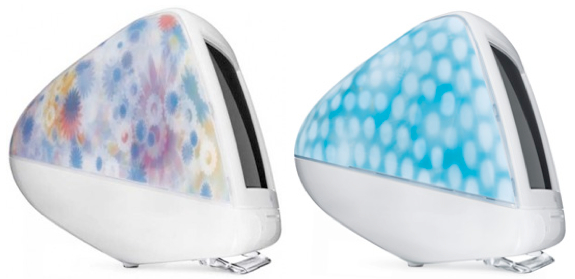
Apple’s turnaround in the ensuing years has generally been attributed to Jobs’s product genius, beginning with the candy-colored iMacs that turned once-beige appliances into objets d’office. But equally important in Apple’s transformation into the economic and cultural force it is today was Cook’s ability to manufacture those computers, and the iPods, iPhones, and iPads that followed, in massive quantities. For that he adopted strategies similar to those used by HP, Compaq, and Dell, companies that were derided by Jobs but had helped usher in an era of outsourced manufacturing and made-to-order products… Cook lowered the company’s month’s worth of stockpiles to days’ and touted, according to a former longtime operations leader, that Apple was “out-Dell-ing Dell” in supply chain efficiencies.
Apple CEO Tim CookCook’s global supply chain greatly improved upon the fabrication approaches that Dell and Compaq had developed. The big PC brands often outsourced both manufacturing and significant design decisions, resulting in computers that were cheap but not distinctive. Cook’s innovation was to force Foxconn and others to adapt to the extravagant aesthetic and quality specifications demanded by Jobs and industrial design head Jony Ive… Apple’s power over suppliers grew after the release of the iPhone, which Foxconn manufactured and which sold 4 million units in its first 200 days. By 2009, an iPhone supply manager says, Apple increasingly took on a “brute-force” approach to dealing with suppliers in Asia. “I could say, ‘You do it this way or you’re toast,’ ” this manager says, adding that Apple started to “just beat the crap out of its vendors.”
In the post-Jobs Apple, Ive’s influence began to wane, while Cook asserted a more cost-conscious approach to new products. He ordered his operations team to work closely with the industrial design group from the earliest stages of the development process, rather than joining months in, as had been the norm under Jobs… And yet, even as Cook transformed Apple into a more diversified company, its dependence on China grew. The only way to drive economies of scale and manufacturing consistency was to concentrate more and more of Apple’s output in areas such as Shenzhen. “If you’re talking about making a million a day of something, launching on a dime, and having the capacity to do that, every machine has to be precise — and to have that happening in multiple countries is challenging,” says a former top executive. “The question becomes: Are you relying too much on one place?”
MacDailyNews Note: There are reams more in the full article — including dependence on China, global and domestic politics, COVID-19 challenges, antitrust claims, and more — here.